- Serving Tulsa & the 918 metro
- Open 24/7 for emergency garage door calls


Garage Door Spring Repair in Tulsa, OK
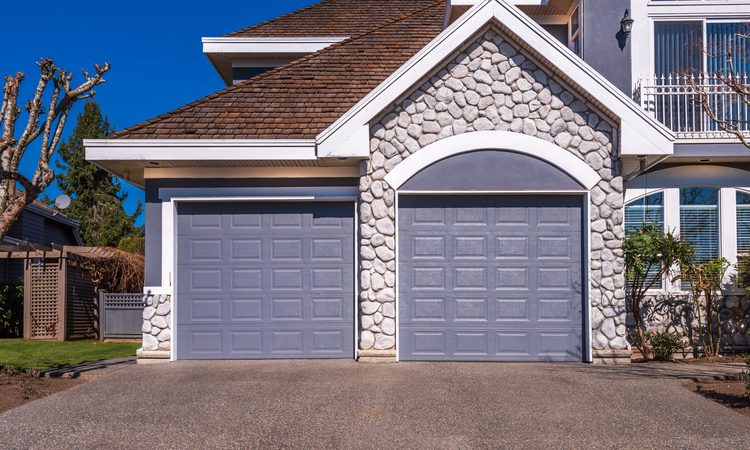
Springs do the heavy lifting on a garage door. The opener only guides the door; the springs carry the weight, and a double steel door can run well over 150 pounds. When a spring breaks, the door becomes dead weight. Trying to lift it by hand or force it up with the opener is how people get hurt and how opener gears get stripped, so leave the door where it sits and call.
Tulsa is rough on springs. A torsion spring is rated in open-close cycles, usually 10,000 for builder-grade hardware, and temperature swings shorten that life. Steel contracts on cold mornings, which is why so many of our spring calls come the first cold snap after a warm stretch. Summers over 100 degrees work the metal from the other direction. If your door went in when the house was built and has never had springs replaced, it is running on borrowed time.
What Spring Replacement Includes
A spring call is not just swapping a coil. The technician weighs the door, matches spring wire size and length to that weight, and checks the parts the failure stressed.
- Torsion and extension spring replacement, matched to the door's actual weight
- Both springs replaced on two-spring doors, so the new spring is not paired with a tired one
- Cable, drum, and center bearing inspection while the door is under tension
- Balance test and opener force adjustment after the swap
Book Spring Repair in Tulsa Today
Spring jobs are quoted as a range on the phone and confirmed at the door before any work starts. Most residential spring replacements in the metro finish in about an hour, and trucks carry the common sizes for standard 7-foot and 8-foot doors, so the first visit is usually the only visit.
One honest note on pricing: two-spring replacement costs more up front than replacing only the broken one, but the surviving spring has the same mileage as the one that failed. Replacing the pair means you are not paying a second service call in six months. We will quote it both ways and let you choose.
If the spring let go while the car is trapped inside, say so when you call. Those jobs get bumped to the front of the route, and that includes after-hours emergency calls. You can also see what the full job typically costs on our Tulsa pricing page.
The Spring Visit, Step by Step
Knowing what should happen keeps every company honest, including us. The technician starts by confirming the failure and checking whether the second spring, the cables, and the drums took damage when the first spring let go. The door gets clamped and the old spring unwound safely, which is the part that makes this a professional job; a wound torsion spring stores enough energy to break an arm, and winding bars, not screwdrivers, are the only correct tool.
Then the door is actually weighed, not guessed at. Spring sizing runs on door weight, and a door that has absorbed years of Oklahoma humidity can weigh noticeably more than its spec sheet. The new springs go on, the door gets balanced until it will sit still at half height on its own, and the opener's force settings are re-tuned to the new spring behavior. The whole sequence normally runs about an hour.
Spring Questions Tulsa Homeowners Ask
Can I just use the opener until the spring is fixed? No. The opener is not built to lift dead weight, and forcing it strips the drive gear, turning one repair into two.
Are high-cycle springs worth it? Usually, yes. Moving from 10,000-cycle to 20,000-plus-cycle springs costs modestly more at swap time and roughly doubles the years before the next bang. On a door that cycles six times a day, that is the best value on the invoice.
Why did the spring break on a cold morning? Steel contracts and stiffens in the cold, and the accumulated fatigue in a worn spring concentrates at its weakest coil. First cold snap of the season is our busiest spring week every single year.
Signs a Spring Is About to Go
Springs telegraph their retirement if you know the signals. The door starts feeling heavy at the halfway point when you lift it manually. The opener strains, hesitates at the start of travel, or needs a second button press on cold mornings. The door drifts down when you stop it half open instead of holding position. Cables start looking slack on one side, or the door sits slightly crooked in the opening. And the loudest signal short of the bang itself: visible stretch or a small gap opening between coils on a spring that used to be tight.
Any one of those is worth a balance check, which takes ten minutes and costs nothing to describe over the phone. Catching a spring in its final season means the replacement happens on your calendar, with the car out of the garage and daylight on the job, instead of at 6:45 on a February morning with a commute waiting. Same repair, better circumstances, and usually a calmer price conversation too.

Schedule Garage Door Service
Tell us what the door is doing and we will call you back with a price range
24/7 Garage Door Repair, Installation
& Replacement Across the 918